Winter Stillwaters
On the last day of January, I fished with clients at Big Well near Redbrook under the Forest rim. What a contrast with the summer just past! Through much of 2025 there had been hardly any flow through pools which were almost stagnant and fringed with algae. Now the spring was discharging rapidly in a strong push of oxygenated water from the limestone hill above into the upper pool, while the side stream which drains Coleford and Newlands was romping down the valley to feed the lower lakes. Most of the encroaching weed had gone. The sound of racing water was everywhere and the fish were lively too. It wasn’t unduly cold and for once the sun was out. A distant rattle of musketry drifting in volleys from upstream reminded us that the pheasant season was nearly over. There was a touch of spring in the air on this particular day, with snow drops spread over the banks, morning birdsong and rooks beginning to gather in their accustomed trees.
A lot of anglers on the commercial rainbow trout lakes will automatically fish a nymph beneath an indicator, and do so every time they visit. I have no problem with that if it’s within the rules. I carry a pack of indicators in my own pocket, and I will use one if I am desperate, but I would much rather fish another method, such as straight-lining nymphs, lures or a dry fly. On this occasion nothing more complicated than a Goldhead Damsel Nymph fished on a floating line and a 12 foot leader was needed. Later, as the fish were looking up and the Yellow Owl having failed, we turned to the famous Suspender Buzzer, small olive ones in size 14, and we had lots of takes at the surface on those. I always assign that particular emerging midge pattern made with a little polystyrene ball at the head to the late John Goddard, although I have seen other claims. During the 1920s Dr JC Mottram, author of Fly Fishing: Some New Arts and Mysteries, was experimenting with little slivers of cork tied behind the hook eye to imitate emerging pupae on the surface at Blagdon.
Such halcyon weather blessed us just for the one day, and barely even that. The rain came back that evening and stayed with us for weeks, while clouds extended from the hills down into the valleys. Farming friends who had been moaning about the drought a few months before were cursing that they couldn’t move their machines in the mud. We went shooting at Keeper’s Lodge near Llanishen, and despite the wet ground and the drizzle it was a good morning although the more distant targets almost vanished from sight in the mist. For once there was no wind.
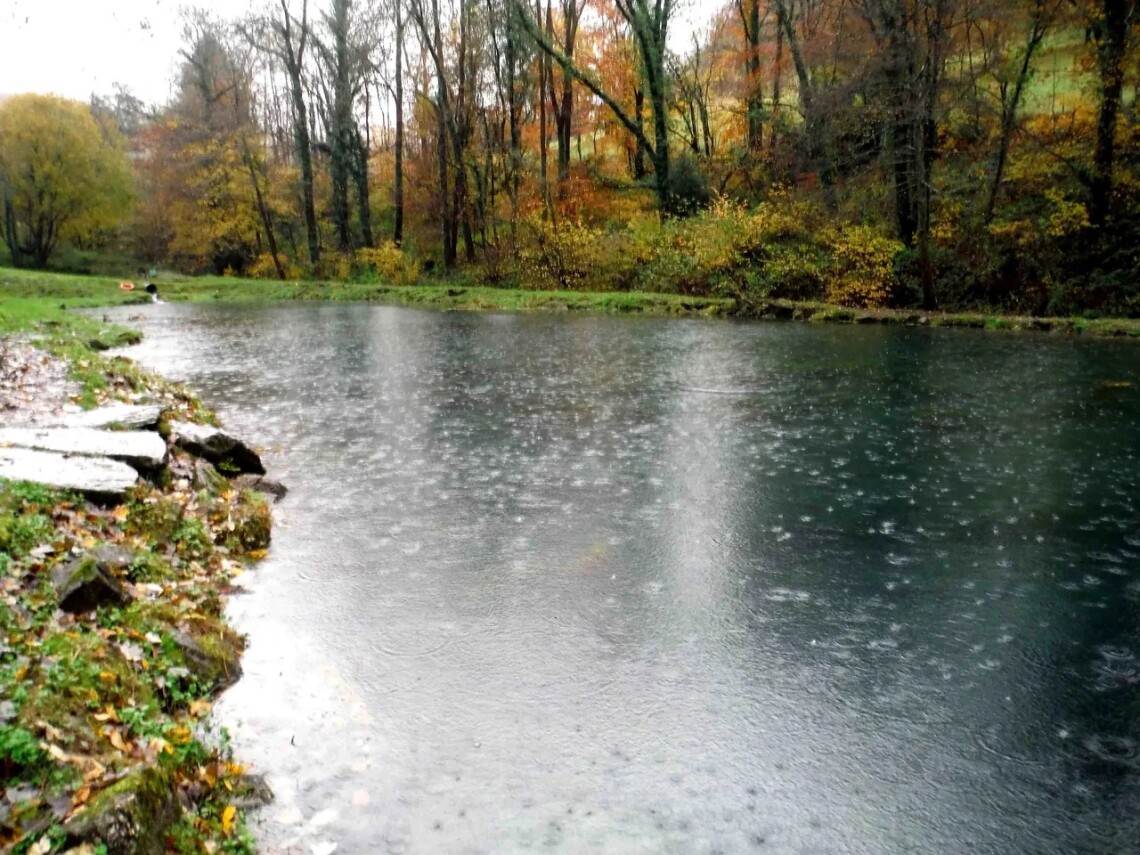 Big Well Fishery
 Floods and February
For many days now there had been almost no fishing potential in our rivers. The Irfon is a tributary which usually sheds its flood water before the rest of the system and Rhodri Lewis of Neath, who is becoming a regular, gave it a try on the last day of January, having been flooded off the Taff. The Irfon gauge at Cilmery showed 0.65 metres, which is just about on the verge of being viable, but proved to be too much for the Middle Serenity House beat where he was unable to get into the water. A switch to the Colonel’s Water upstream provided slightly better access, but searching the whole beat with nymphs produced no results. The Taff, he suggested, when in condition seems to be a much better grayling river at the moment. A visitor from Chepstow also fished the Irfon, at Aberbwtran on 1st February, but produced only a single chub. Robert Evans from Cwmbran fished the main Wye at How Caple Court using the Method (a feeder combined with a very short hook link) and took a barbel and 10 chub. VC from Hereford with a friend took 4 barbel at Middle Hill Court on 4th February. The odd chub and a pike came from the middle river as the month went on. Gareth Lewis from Abergavenny managed 6 chub from Foy Bridge on the 12th. Robert Evans from Cwmbran had a brace of chub at How Caple Court on the 17th.
On the 20th Gavin Beck with a friend from Thursby, Carlisle came to fish at Middle Hill Court. They caught 6 chub and had the following comment to make: “Only bug-bear with pretty much all of the Wye & Usk fisheries was the access and totally inadequate parking, fully understand you can’t have a road through to the edge of a field but come on we are paying top end day ticket prices with about leaving a vehicle in a precarious situation.” As far as Middle Hill Court is concerned, I find that comment rather difficult to understand. I use the Hill Court beats a good deal and regard the gravelled estate access roads and parking areas as more than adequate and safe, even in conditions of flood. I can only assume they were in the wrong place. On the following day they fished at Courtfield for 11 chub and had this to remark: “One negative comment which I think is worth sharing is the access to fishing at the water works, any vehicle except a true 4x4 would struggle in the winter months.” I won’t comment on that but next came a planned day at Foy Bridge where again they failed to find a suitable spot: “Fishing unfishable due to levels and speed of flow. Unsure if Foy Bridge should be open to book in winter months with lack of any real flood pegs or slack water.” The WUF booked them instead at Middle Hill Court again where they caught 8 chub to 5 pounds 2 ounces. Others also gave Middle Hill Court a try: Kevin Tompkins from Bath reported 4 barbel and 4 chub while two anglers from Bristol had 11 chub and a pike. Meanwhile two anglers from Reading caught 7 chub at How Caple Court. Gareth Lewis from Abergavenny fished Foy Bridge, still in high water on 23rd February, and caught 6 chub to 4.5 pounds. Chris Duller from Ystrad Meurig managed 8 chub at Fownhope No 5.
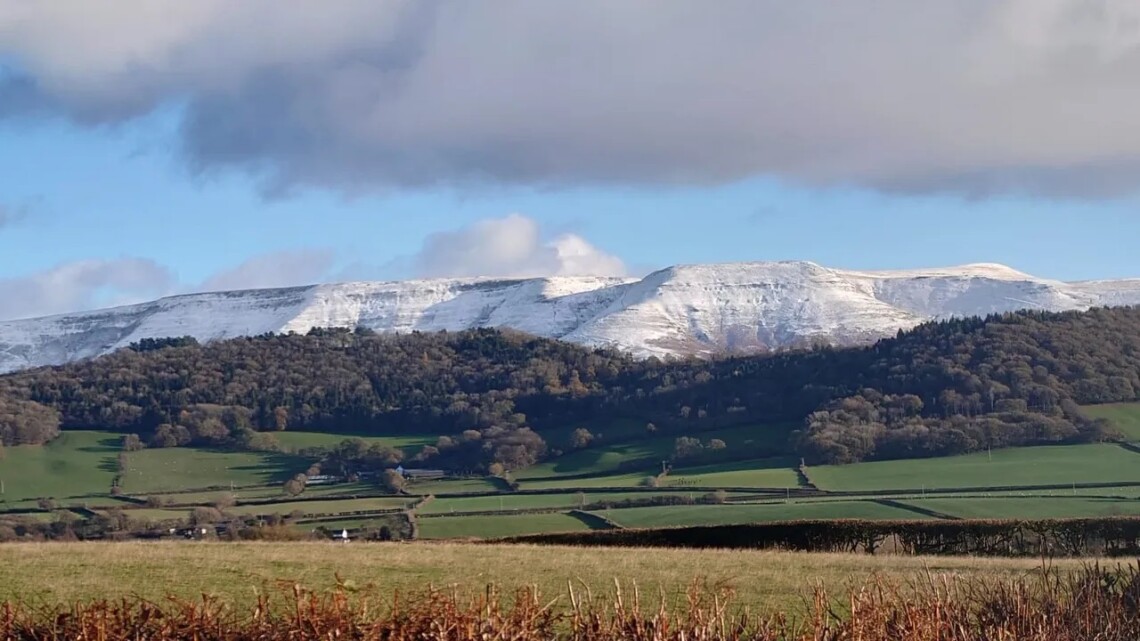 Black Mountains from the Wye Valley
 As temperatures increased during the last days of February, more barbel began to show. Simon Greaves from Tiverton reported 1 barbel and 5 chub from the Creel. Tim Stanton from Cheddar was at Middle Hill Court on the 24th and reported 1 barbel and 3 chub: “Fished upstream from the end of the beat and was pleased to find excellent parking." Jan Cundy from Reading was also at Middle Court on the 24th and caught 1 barbel and 10 chub. Another angler at Middle Hill Court on the same day, Steve Lambley from Alcester, had 2 barbel and 2 chub. The larger of the two barbel was exactly 13 pounds – quite a specimen.
Water Gauges
There hasn’t been much to do this month but watch the rain on the window panes and…without any great optimism…keep checking the river gauge page on the WUF Passport site. The WUF gauges are in a bit of a muddle at the moment. Taking the Wye from the top, the Llangurig gauge has been out of order for a long time, Rhayader is working, as is Erwood (if it emerges from present floods unscathed), but Redbrook at the bottom end has been inoperative for a long time. On the Usk, the Brecon gauge at the top of the river works, but the gauge at Glanusk Park has gone and Trostrey at the bottom end has also been out of order for a long time. The Middle Monnow WUF gauge at Grosmont, the only one on the tributary, is in working order at the moment. I believe the one which used to be on the Lugg at Byton has been removed.
From the ordinary angling point of view, if you already know the sort of WUF gauge readings you are looking for to give you viable wading and fishing in the sections of river you like to fish, now get to know the equivalent EA and NRW gauge readings as well. There is really no substitute for experience in this. When you go fishing, take a note of the readings and you will soon learn what kind of access you can achieve in safety at different water levels. For example, if I wanted to go wading and fishing for trout and grayling on an upper Wye beat, I would be looking for a WUF gauge reading of 1ft 6 inches or less at Llanstephan, or on the EA gauge 1.2 metres. If I wanted to go trout fishing on the upper Usk, I would be looking for a reading at Brecon of not much more than 1 foot 3 inches. I would be looking for a lower reading if fishing further downstream and I might also check the EA gauge at Chainbridge. To fish the Monnow I would not like to see much more than 1 foot at the WUF gauge and the water reasonably clear. For the Lugg, a maximum would be 0.5 metres on the EA gauge at Byton Levels and preferably much less. Remember that if you go fishing on a falling flood, the higher upstream the beat you select, the easier it gets. Salmon fishing on the main rivers is perhaps a bit more nuanced in terms of levels rising and falling, but if I wanted to fish Goodrich Court on the lower Wye, I would be happy with 0.60 metres on the EA gauge at Ross. There is no longer a relevant WUF gauge. Of the Forest of Dean streams, 0.30 metres on the EA gauge at Parkend should be a good measure for the Cannop Brook. There is no gauge on the Bideford Brook which takes water from two different valleys, those of the Blackpool Brook and the Soudley Brook, so if rain is localised you may have to go and look. Of course all this is fine if your time is your own and you can make a decision to go fishing on a whim. If you lead a busy life like most of us and have a holiday and fishing booked in advance, you may have to accept what the fates deliver on the day.
Flooding and Aviva’s report
Rain continued day after day through most of February. This time the Severn caused more trouble than both the Wye and the Usk, leaving its bed to flood the A417 north from Gloucester and surrounding Tewkesbury Abbey on its island. Upton on Severn was similarly surrounded by water and approached by causeways. I always find it remarkable that ancient buildings very rarely flood; our forefathers knew better than us where to build and where not. Can you remember seeing a flooded church or grave yard? Today, house building is going on apace, including ribbon development along the A48. This used to be considered an example of bad planning. The new building sites north of Gloucester seem to be encroaching on land which used to consist of caravan sites or periodically flooded scrub and waste land. The Aviva insurance group has recently brought out a report claiming that new house building projects are now regularly taking an unduly cavalier approach to the risk of flooding and there is evidence from many sources that sewage systems are becoming steadily more overloaded as new houses are added to the existing network. According to Aviva, 26% of current new homes have some risk of flooding and about 1/3 will be facing flood risks by 2050.
By late February with showers still in the forecast, the area of Salisbury Plain and the chalk stream valleys began to receive warnings of “groundwater flooding.” Put simply this means that the water table which is always there rises to reach the surface. As it does so it will first flood basements and cellars before erupting through drains. It is a slow process and will only happen after extended rainfall, but it is why some houses in these areas are equipped with pumps. Chalk land is naturally porous and this is also the reason for the “winterbourne” phenomenon by which the exact source of a chalk stream is difficult to define. The area of running surface water moves up the valley as the winter becomes wetter, but disappears entirely during summer drought.
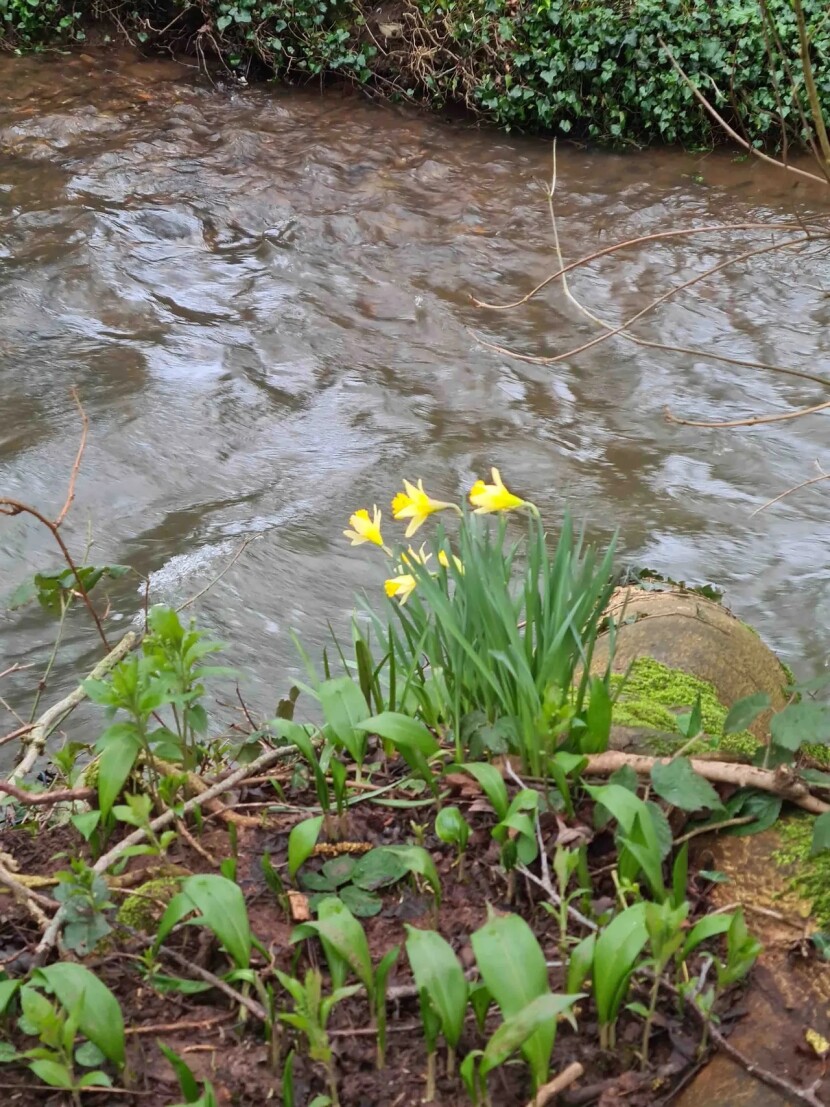 Daffodils already
 Signs of Spring
I have to admit that by the end of the month we did seem to be turning a corner. Temperatures were now up in double figures, song birds were noisy from first light, daffodils and primroses had joined snow drops on the banks and the first lambs were in the fields. People assume for some reason that an angling guide should know a lot about the birds and especially the birdsong of the British countryside. Actually I am woefully ignorant, not to mention slightly deaf. However, my son the other day put the Merlin app from Cornell Lab onto my phone and I have been having a lot of fun with that. You simply sit down in the garden with a coffee, or maybe stop in a wood while walking, switch on the app and after a moment it shows you pictures of what you are listening to. Even an aged technophobe like me can enjoy this.
Mountain Lakes
The March edition of Fly Fishing and Fly Tying carries an article by Alan Parfitt about some of the very high altitude lakes of Wales. This is where one specific branch of our sport, upland lake fishing, combines with another sport entirely, hill walking. For myself, I have always enjoyed the first activity, but I am getting a wee bit old for the hill walking bit. Some of the Welsh Llyns have been modified or even created by dams for use by the Water Company, in which case there is usually an access road. However many are natural lakes, usually formed in limestone country, and in certain cases dammed up by glacial moraines, relics of the last ice age, and these are to be found as far south as the mountains of Glamorgan. There is a common shape and look to these pools, half surrounded by amphitheatre cliffs, scraped out by ice and looking almost as if newly formed. In geological terms they are relatively new. Malham Tarn and Cove in Yorkshire, land which is managed by the National Trust, is a probably better known limestone formation, but most of those in Wales are hidden away in folds of the mountains and you must walk and climb to reach them.
The documentation available is quite good, particularly if you can lay your hands on Frank Ward’s Lakes of Wales, published in 1931. Mr Ward’s work is an amazing effort, covering almost every piece of still water in Wales. The book’s system of maps and lists take a bit of getting used to, but there is a mass of information to be found. This one is a rare book; if you can find a copy, treasure it. For something more modern, Alan Parfitt and Ceri Thomas have compiled Wild Lakes of Wales, which you can get from Coch y Bondddu Books.
I always considered that to catch a trout from any pool at an altitude of 1,000 feet above sea level equalled quite a feat. Ward listed more than 200 lakes over 1,000 feet in altitude, but only 21 or so over 2,000 feet, mostly in Snowdonia. Accordingly Alan Parfitt has set himself a sterner task, which is to catch fish in all those over 2,000 feet likely to contain fish, which may be 8. This article with some glorious photographs is the story of his tough climbs to cast a fly in them all and I won’t spoil it by telling you the result. Alan does advise to travel very light; a single rod and floating line with a box of flies is enough, fish in walking boots rather than chest waders, and once arrived, keep on the move along the margin: step and cast, step and cast. And of course the usual high mountain safety rules apply: go with a friend and make sure people know where you are going and when expected back.
Meanwhile the Wye and Usk Foundation’s Fishing Passport website includes quite a large section on the mountain lakes of Wales and some of these fisheries are not quite as difficult to reach as the 2,000 foot high waters described by Alan. Teifi Pools above Tregaron have a tarmac road all the way up, while Llyn Bugeilyn in the Cambrian Mountains has a track suitable for a 4WD or high ground clearance vehicle.
Green Paper
“Governance must be clear…If the last 15 years have shown anything, it is that shared regulatory responsibility of cross-border rivers has not delivered a cohesive integrated catchment approach.” See here for Afonydd Cymru’s summary of the Welsh Government’s Green Paper on the water industry.
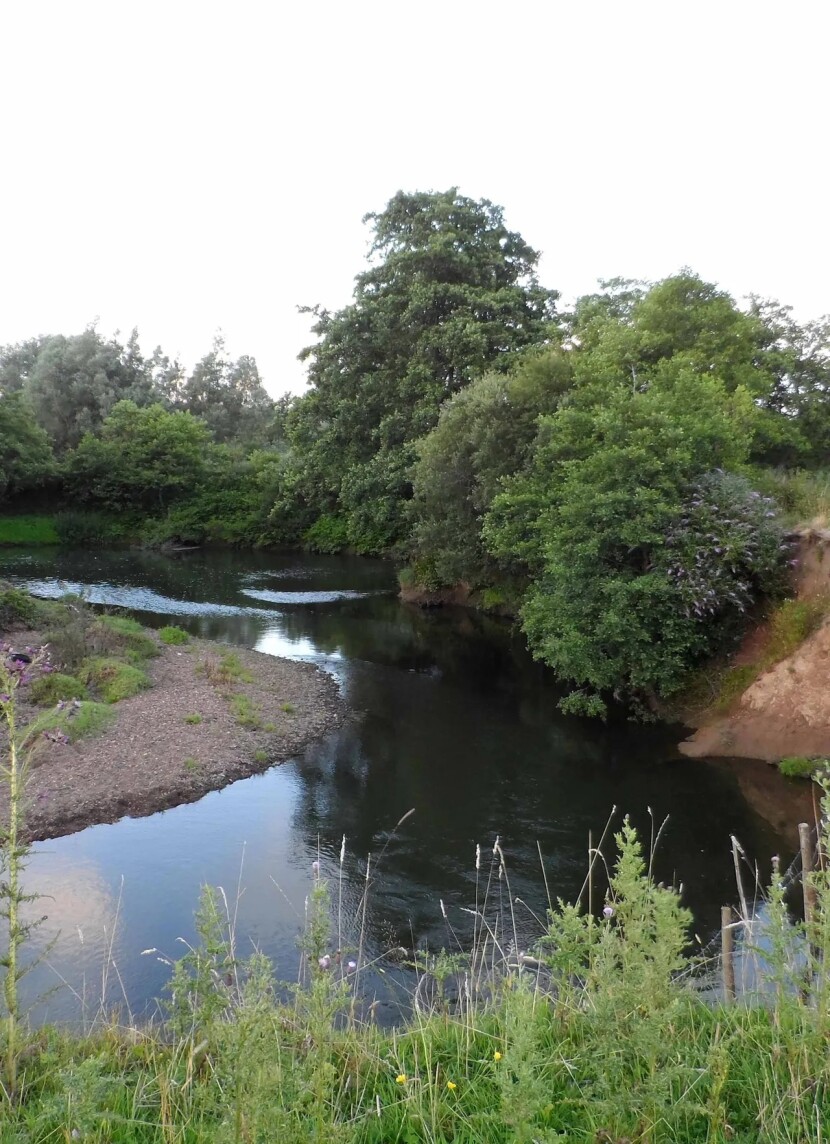 The Loughor, haunt of hugh sewin
 Mysterious Loughor
The smaller the stream, the bigger the sewin, or so it used to be said about this one. In fact the estuary between the Gower and Llanelli is enormous. The Loughor or Llwchwr, which rises unexpectedly from a cave on the Black Mountain and wanders between Carmarthen and Glamorgan before discharging into Burry Inlet, is the latest river to be featured by Seth Johnson-Marshal of Afonydd Cymru. See here
Fishing 2026
Assuming water levels will make it possible, if looking for a day with the trout I would make a start somewhere on the middle or lower Usk. One of the town waters, Brecon, Abergavenny or Usk, might be a good bet. Look out for large dark olives in the middle of the day and a team of spiders should serve you well. Otherwise, every year we have the same quandary: where to take a punt on the first salmon of the year? I doubt it will be the Usk, which is not normally such an early river, so if I am forced to make a guess, a fish might come from somewhere below Glasbury on the middle Wye. In truth, given the extensive floods we have experienced, that first fish could come from almost anywhere. It is raining again right now, but let’s be optimistic. Tight lines!
For the full Oliver Burch Report visit https://wyefishing.com/monthly-fishing-report